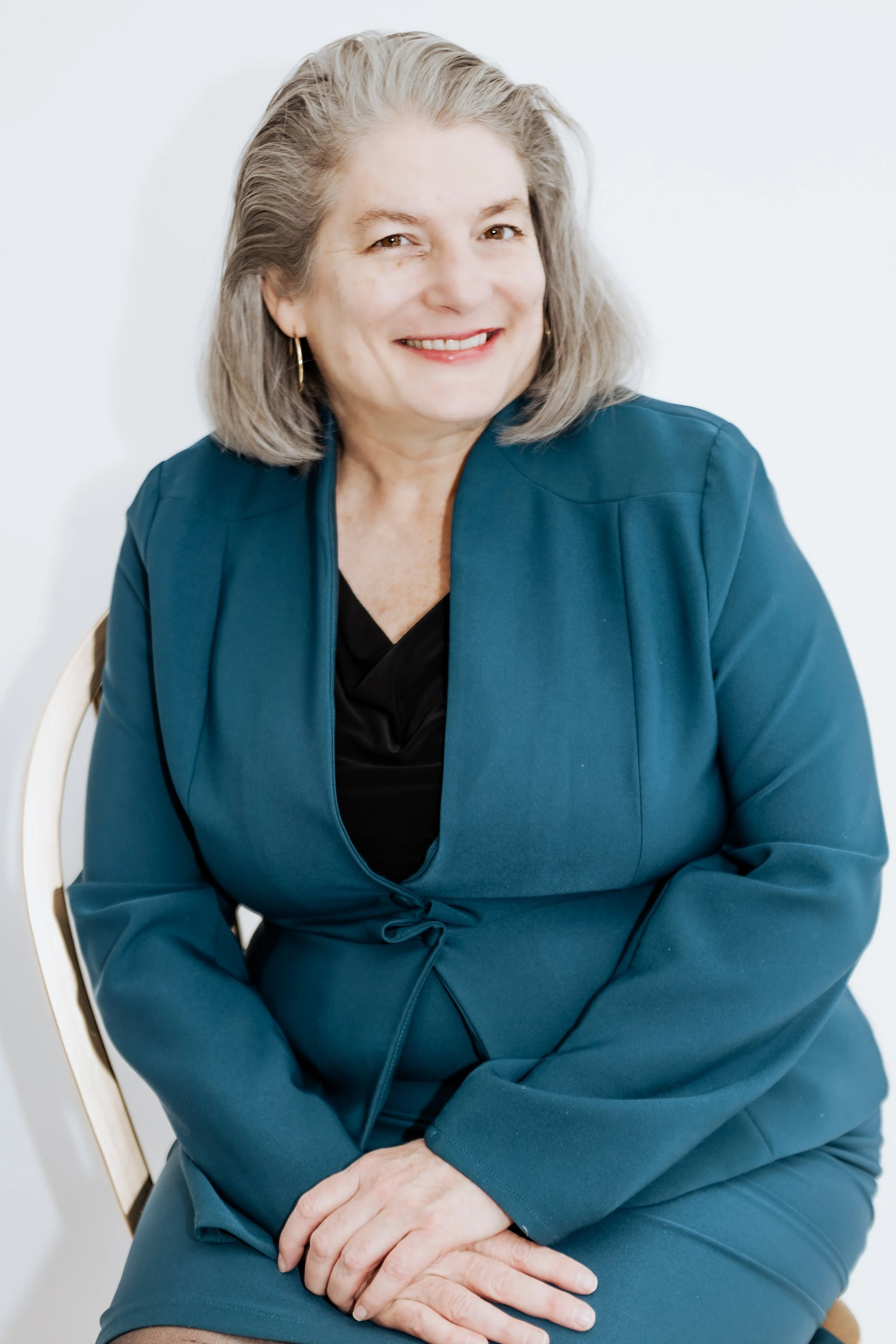
Right Action: The Bridge to the Divine
D’VAR Rachel Kling
April 25, 2026
Right Action: The Bridge to the Divine
There are so many ways to be a Jew. We are perhaps the only religion where believing in God is not a prerequisite for belonging. For example, a minyan requires 10 Jews not 10 believers. According to the 2021 Pew Survey of American Jews, only about one-third of Jews say they believe in the God of the Bible as described in the Torah, yet the overwhelming majority say being Jewish is very important to them.
In my upbringing Being Jewish meant fighting for civil rights, peace, an end to racism, economic equality, and all the good things. Jews were good, had been oppressed and were on the right side of history. The fight for justice was inextricably tied to being Jewish. This was a Judaism unpaired from God or any spiritual dimension. But there was a catch.
I learned very quickly and very early that to be a social justice Jew meant that you had to agree with the people making the rules about how to fight for justice.
As soon as I was 18, I pursued a spiritual life. I chose non-Jewish paths. I rejected not justice, but ideological conformity. I wandered through Buddhism, the yogic path, a flirtation with Christianity and finally found my home in the path of aikido, an enlightened Japanese martial art grounded in our connection to the divine. I trained for 25 years, 18 of those years with Aaron Ward Sensei. I left my Jewish identity far behind.
And then October 7 happened.
Something broke. Not only in Israel. Something broke in me.
I had built a life inside a spiritual universalism. I believed — deeply — that if we embodied love, it would be stronger than history.
October 7 shattered that illusion. And what followed shattered it further. The speed with which Jewish pain was dismissed, Jews were blamed, erased, and vilified, the ease with which calls for our annihilation appeared, made something unmistakable: I was a Jew whether I leaned into it or not. I watched with helpless rage and horror. I still feel it.
I am not speaking abstractly. Even now, I watch professional institutions debate whether Jews count as a minority, and whether Israelis belong in global associations.
After October 7, I needed Jews, Jewish language, and a Jewish God. After a particularly painful interaction, I reached out to the local rabbi. In November 2023, I joined Temple Sinai.
For a long time, I tried to stay in aikido. I still believed in love. I wanted to believe that our practice could transcend politics and identity.
But then came the rupture. A fellow practitioner of twenty-five years and I erupted in anger and accusation.
In that moment I understood something devastating: love that cannot hold Jewish pain is not the love I thought it was. Harmony that fractures when Jews bleed is not harmony. And I saw how quickly hate could take root in my heart.
At this point I left unequivocally. Not because I stopped believing in love — but because I needed a love that could survive Jewish vulnerability.
I discussed this with my instructor, and he responded with love care and understanding. He gave me his blessing. And he celebrates with all of us today. And I know that part of me will always rest in that community. Aikido taught my body harmony. The Torah teaches my soul covenant. Life is a dialectic. As the Talmud teaches, Elu v'elu divrei Elohim Chayim. These and those are the words of the living God. Even in contradiction, truth can coexist. Our tradition is rooted in respectful dispute, and in that tension, we find a path forward.
And this brings me to the text of my torah portion, Kedoshim. Kedoshim commands us to be holy and gives us very clear instructions. You will not hold hate in your heart. You will love your neighbor as yourself. You will not speak ill of the deaf or put a stumbling block before the blind. You will rebuke your kindred if he is wrong, but incur no sin on his account. In all these commandments, I have failed. I have held hate in my heart. I have rebuked with the intention to injure. I have taken sin upon myself in my anger.
This is my vidui. My confession.
Let us all in this room take a moment to look within.
לֹֽא־תִשְׂנָ֥א אֶת־אָחִ֖יךָ בִּלְבָבֶ֑ךָ הוֹכֵ֤חַ תּוֹכִ֙יחַ֙ אֶת־עֲמִיתֶ֔ךָ וְלֹא־תִשָּׂ֥א עָלָ֖יו חֵֽטְא.
You shall not hate your kinsfolk in your heart. Reprove your kindred but incur no guilt on their account.
When have we failed this covenant? When have we held hate in our hearts? When, in person, on social media, by text have we taken sin upon ourselves rebuking with malice. Does this improve our plight, our fate?
Does it make us stronger as a people? Does it right wrongs? Or does it merely separate us further from our own humanity, and cut us off from God?
Right action is the bridge to the divine. If divinity or God is not a concept that works for you, think of Right action as the manifestation of our highest potentional as human beings.
We repair this broken world just by doing the right thing when we would rather do harm. That is our path to healing. That is God’s presence in this world of injustice and pain. The manifestation of the deepest level of our humanity. And we must indeed dig deep.
Seeing the humanity in one another makes us holy. How far I am from this in my rage and hate in a post October 7 world, and how far we are as a human community.
But we can see the Image of God in one another, as we are each made b’tzelem Elohim, in the image of God. We can see this beyond the curtains of wrongdoing and hatred. This capacity is God’s gift to us. We get there through following the commandments laid out in kedoshim. And when we can’t get there in our hearts, we can do the right thing anyway. Action can come before belief, or before good will. Action is the discipline of covenant. At Sinai we said, Na a ’se v’Nishma. We will do, and we will hear.
As I talked with my rabbi about what I wanted to write about, he explained to me the singularly Jewish path to holiness. It is three-fold. Prayer. For forgiveness and the strength to be holy and good amid pain and injustice. Teshuvah, which means return and is our ability, to get back on the path of right action and right attitude. And finally, Chesed, loving kindness. We should act with Chesed even when angry. This is how we can be holy.
And now I return to the beginning of my talk today. Though it was imperfect and at times unholy by the standards of Kedoshim, I was raised to believe in Chesed. We live in a messy and contradictory world. I end my talk to today with gratitude.
Gratitude to my family for helping me understand the importance of Chesed. Gratitude to aikido for showing me Chesed, and gratitude to my rabbi for teaching me that Chesed is a spiritual practice and the way back to the path of right action. For helping me see that If I practice Chesed, commit to Teshuva and pray for strength, I can be angry and holy. Becoming bat mitzvah means binding myself to right action even when my heart is fractured. We act. We celebrate. We rejoice together. In love, in gratitude, and in community.
Shabbat Shalom.